
Chocolate did not start in Switzerland, and it did not start as a candy bar. It started in Mesoamerica, thousands of years before any European ever tasted it.
The Olmec civilization, in what's now southern Mexico, were cultivating cacao as early as 1500 BCE, and archaeologists have found traces of it in pottery that old. The Maya refined it further, grinding roasted cacao beans and mixing them with water, chili, and cornmeal to make a thick, frothy, bitter drink that had nothing in common with what we call hot chocolate today. It wasn't sweet. It wasn't a treat for children. It was consumed by adults, often in ceremonial and religious contexts, and cacao beans were valuable enough that the Maya and later the Aztec used them as currency.
The Aztec Empire took the drink and made it central to elite and ceremonial life. Emperor Moctezuma reportedly drank it before entering his harem, warriors drank it before battle, and it was offered in religious ceremonies as something sacred. Spanish conquistadors who encountered it in the 1500s found the bitterness strange at first, but once they started adding cane sugar and bringing it back to Europe, it set off a craze among European aristocracy that eventually turned into the chocolate industry the world has today.
What often gets left out of that story is what happened next. As chocolate became a profitable European commodity, cacao plantations spread across Mexico, Brazil, and the Caribbean, and those plantations ran on enslaved African labor. The spiced, cinnamon-forward hot chocolate tradition that exists in Mexico today, the one this drink is named for, carries both legacies at once: the ceremonial brilliance of Indigenous Mesoamerican civilizations, and the forced labor of enslaved Africans who were brought across an ocean to grow and process the very crop that made chocolate a global commodity in the first place.
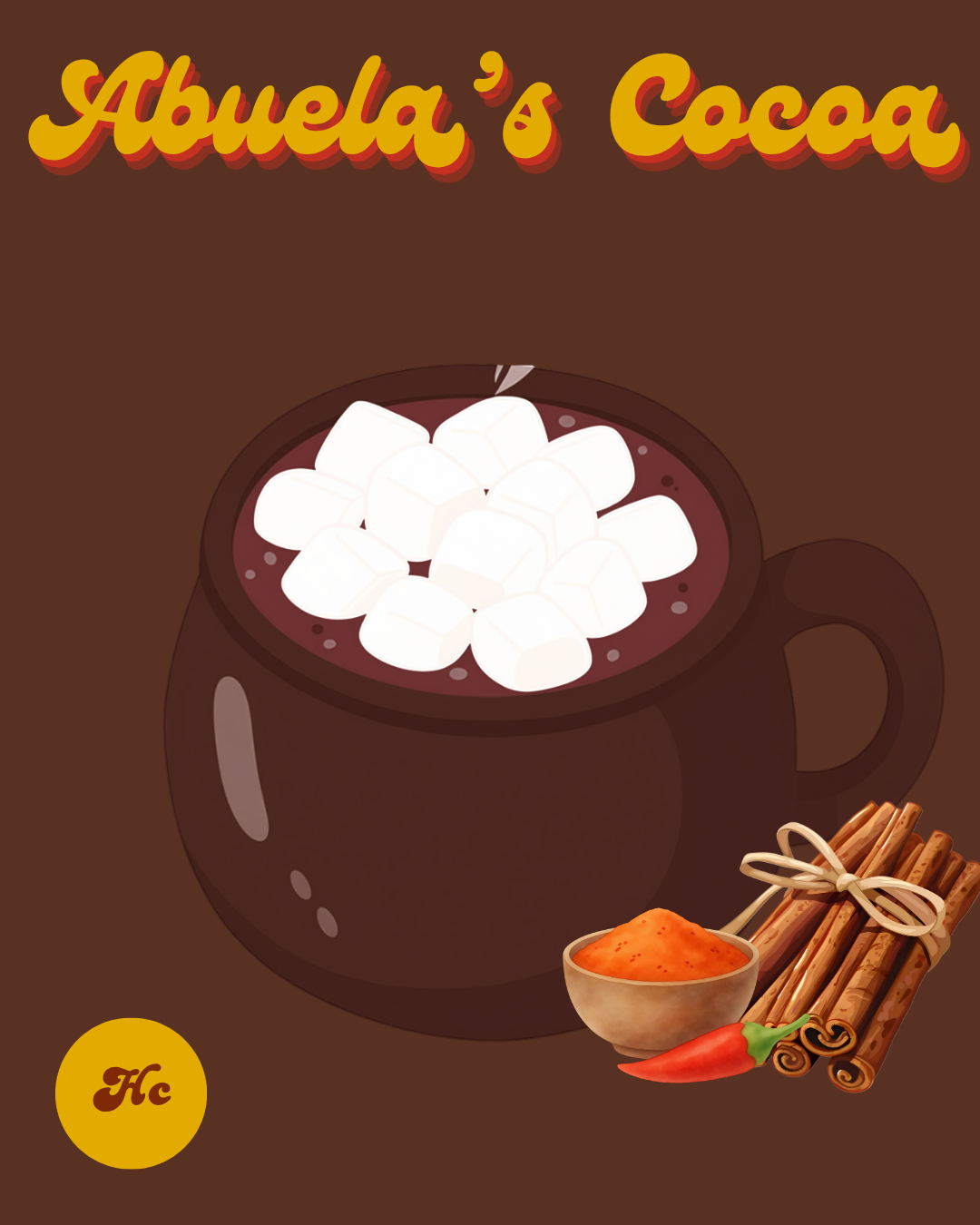
The cayenne in this drink isn't a modern twist dreamed up by a barista. The Aztecs drank their chocolate with chili as standard practice, a combination that predates European contact by centuries.
We kept it that way on purpose. Mexican chocolate, a cinnamon stick, a real pinch of cayenne, and vanilla whipped cream on top. Spiced the way it was always meant to be, sweet second, heat first.