
There's a patch of ground in New Orleans that changed American music forever, and almost nobody outside Louisiana knows its name.
Congo Square sits at the edge of what's now the French Quarter, and under French and then Spanish colonial law, it was one of the only places in antebellum America where enslaved Africans were legally permitted to gather publicly.
Starting in the 1740s and continuing for roughly a century, enslaved and free Black people gathered there on Sunday afternoons, their one sanctioned day of rest, to trade goods, dance, and play music using drums, string instruments, and rhythms carried directly from West and Central Africa.
Visitors and observers at the time described gatherings of hundreds, sometimes more than a thousand people, moving to rhythms that white American audiences had never heard before. Historians and musicologists now trace the direct lineage from those Congo Square gatherings to the development of jazz, blues, and ultimately most of American popular music, making it one of the most consequential cultural sites in the country's history, built entirely by people who were denied freedom everywhere else in the city.
What made Congo Square possible was partly Louisiana's unusual colonial legal structure, which allowed for a degree of public Black gathering that most of the American South violently suppressed. That didn't make it a comfortable arrangement. Enslaved people used those Sunday gatherings to maintain the spiritual, musical, and culinary traditions of their homelands under conditions designed to erase them, turning a few sanctioned hours each week into an act of cultural survival that outlasted slavery itself.
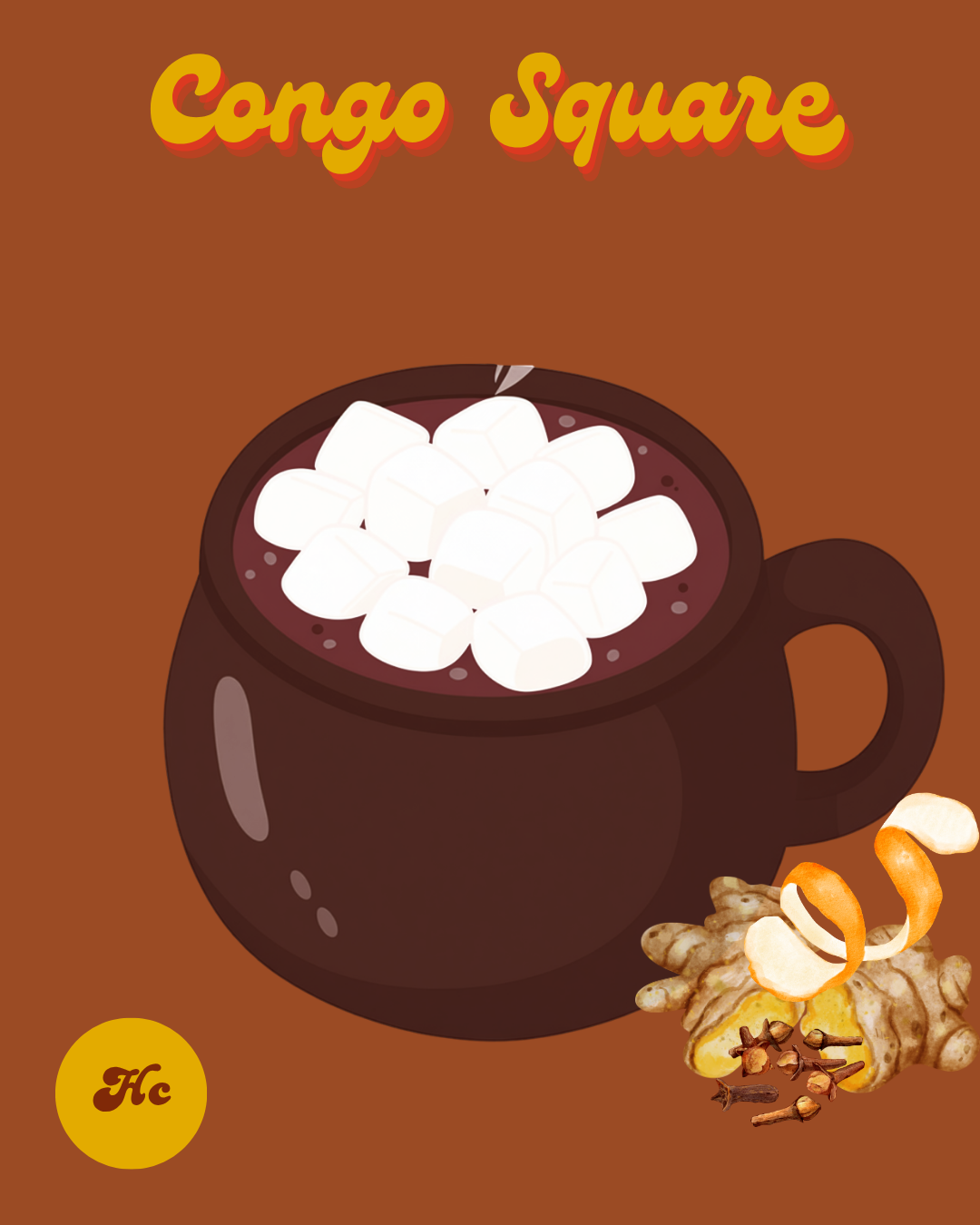
Ginger, clove, and citrus peel all carry deep roots across West and Central African cooking, the same regions the rhythms in Congo Square came from, and all three spices traveled through the diaspora into Caribbean and Creole kitchens, where they remain staples of New Orleans cuisine today. This drink steeps ginger and clove into dark chocolate, bright with orange , topped with plain whipped cream. Spiced like a gathering that was. never supposed to happen, and happened anyway, every single Sunday, for a hundred years.