
Coconut feels tropical, but its path to the Black American table runs straight through West Africa.
Coconut palms likely spread to West Africa through ancient trade routes connecting the continent to South and Southeast Asia long before European contact, and by the time transatlantic trade began, coconut cultivation and cooking knowledge were already deeply embedded in West African coastal communities. That knowledge crossed the Atlantic the same way so much else did, carried in the minds of enslaved people who had no say in the crossing but brought everything they knew anyway.
In the Caribbean and along the American coastal South, coconut took root in Black cooking as both a practical ingredient and a comfort food, used in savory stews, in rice dishes, in desserts, and eventually in the kind of sweet, rich drinks meant to be shared rather than rushed. Toasting coconut specifically, letting the natural sugars caramelize under low heat until the flakes turn golden and fragrant, is a technique that shows up across Caribbean and West African dessert traditions alike, prized for turning something plain into something that smells like an occasion before it even reaches the table.
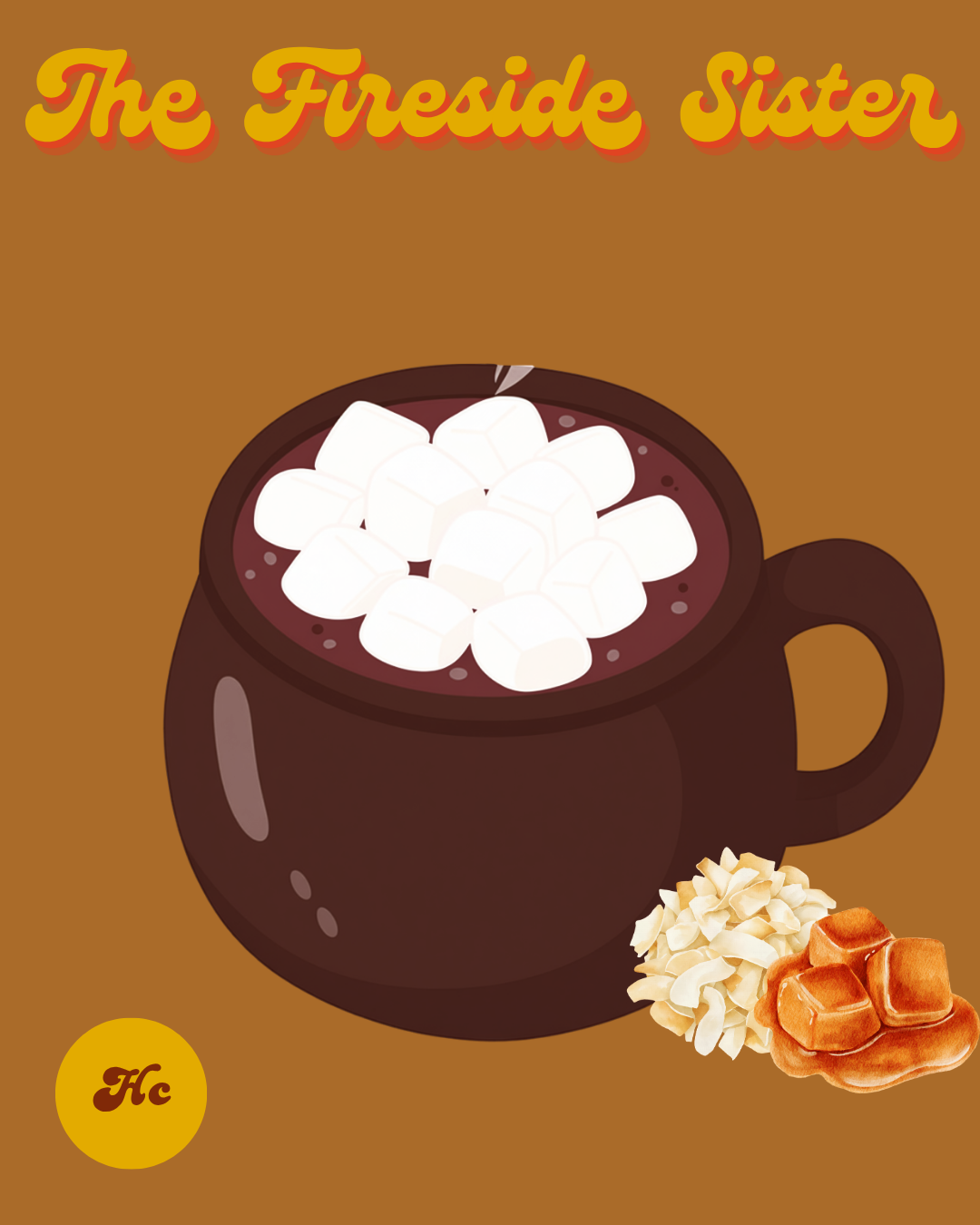
This drink leans into that occasion feeling on purpose. It's built for the specific kind of evening where the whole family somehow ends up in one room, not because anyone planned it that way, but because that room is the warmest one in the house and everyone drifted there without really deciding to. Milk chocolate, a drizzle of real caramel, coconut whipped cream, sweetness that builds slowly, the way warmth from a fire does rather than arriving all at once.
The name is the whole idea. Not every winter tradition has a grand historical event behind it. Some of them are just about the sister who always ends up by the fire with everyone gathered around her, holding the room together without trying to. This one's for her.