
Ask almost any Black family in America whose sweet potato pie is the best, and you'll start an argument that's been going on for generations. That argument exists because the dish matters that much.
The sweet potato itself is originally from Central and South America, but it found its way into West African agriculture centuries ago through early trade routes, and by the time of the transatlantic slave trade, it had become a familiar, reliable crop across parts of the continent. When enslaved Africans arrived in the American South, they recognized the sweet potato as something close to crops they already knew how to grow and cook, and it quickly became one of the most essential staples in enslaved communities, prized because it grew well in poor soil, stored through the winter, and could be prepared a dozen different ways with almost nothing else added.
Sweet potato pie specifically grew out of that resourcefulness. Enslaved cooks, working in plantation kitchens with limited ingredients and even more limited recognition for their skill, adapted European pie-making traditions to the ingredients actually available to them, and the sweet potato, abundant and naturally sweet, became the foundation of what's now one of the most iconic desserts in Black American cooking. The pie traveled everywhere Black families went after Emancipation, carried north during the Great Migration, served at church dinners, holidays, and the specific kind of Sunday where the whole extended family shows up and nobody leaves hungry.
The dish became so central to Black Southern identity that it eventually became shorthand for home itself, the thing people miss most when they're far from family, the dessert that signals a holiday is actually happening. Grandmothers in particular became the keepers of the recipe in most families, guarding ratios and techniques that rarely got written down anywhere, passed on instead by watching hands work through the same motions year after year.
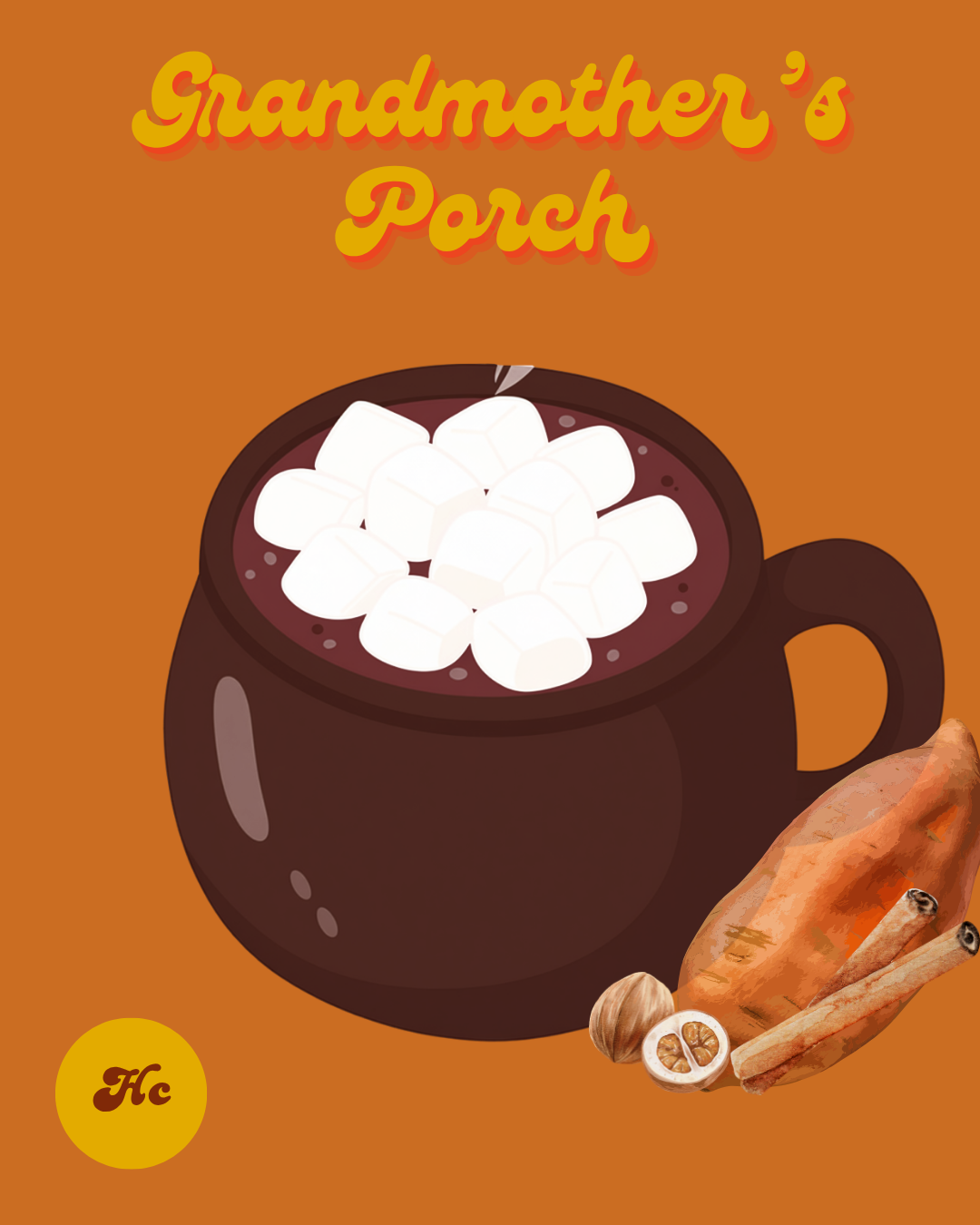
This drink pulls that whole tradition into a cup. Real sweet potato puree, warmed through with nutmeg and brown sugar, folded into milk chocolate until it tastes less like a novelty and more like the inside of an actual pie, finished with a brown sugar cream float and a dusting of cinnamon on top. It's built around a very specific memory, a grandmother's kitchen on a cold afternoon, the oven running since before anyone woke up, and the whole house smelling like it.